
Welcome to Your New Favorite Korean Beef Rice Bowl Recipe!
Are you ready to dive into a deliciously satisfying dish that brings the flavors of Korea right to your kitchen? This Korean Beef Rice Bowl recipe is not only easy to make, but it’s also packed with vibrant flavors that will make your taste buds dance. Perfect for a weeknight dinner or a cozy gathering with friends, this dish is all about comfort and enjoyment. So, let’s roll up our sleeves and get cooking!
Why You’ll Love This Recipe
This recipe isn’t just about great taste; it’s about making cooking a joyful experience. Here are some reasons why you’ll adore these Korean Beef Rice Bowls:
- Quick and Easy: With minimal prep and cook time, you can have a delicious meal on the table in under 30 minutes!
- Flavor Explosion: The blend of soy sauce, gochujang, and sesame oil creates a savory sauce that elevates the beef to new heights.
- Customizable: Feel free to adjust the ingredients based on what you have at home or your spice tolerance. This dish is flexible!
- Healthy Ingredients: Packed with protein from the beef and vitamins from fresh veggies, this meal is both nourishing and satisfying.
- Fun to Assemble: Layering your bowl with rice, beef, and toppings is a fun and interactive way to serve dinner.
Ingredient Breakdown
Let’s take a closer look at the ingredients you’ll need for your Korean Beef Rice Bowls, along with some substitutions to help you out:
- Ground Beef: 500 g minced ground beef. You can also use ground turkey or chicken for a lighter option.
- Garlic & Ginger: 1 tsp freshly grated garlic and 1 tsp freshly grated ginger for that aromatic kick.
- Soy Sauce: 3 tbsp all-purpose soy sauce. For a gluten-free version, substitute with tamari.
- Brown Sugar: 2 tbsp brown sugar to balance the flavors. Honey or maple syrup works well too!
- Sesame Oil: 1 tbsp sesame oil adds a nutty flavor, but can be omitted if you’re allergic.
- Gochujang: 1 tbsp gochujang, adjust for spice preference. If you don’t have it, you can use sriracha or chili paste.
- Rice Vinegar: 1 tsp rice vinegar gives a slight tang; feel free to use apple cider vinegar if that’s what you have.
- Sesame Seeds: 1 tbsp sesame seeds, plus extra for garnish.
- Oil: 2 tbsp extra-virgin olive oil or any neutral oil for cooking.
- Vegetables: Fresh veggies like spring onions, carrots, and cucumbers for freshness and crunch.
- Ketchup: For a unique twist, you can add a dollop of ketchup in the mayo drizzle!
Steps to Create Your Delicious Korean Beef Rice Bowls
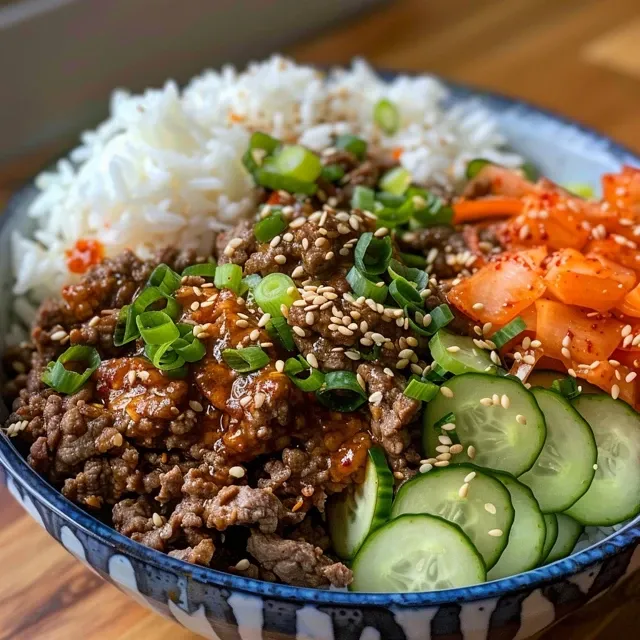
Follow these simple steps to whip up your Korean Beef Rice Bowls:
- Make the Stir-Fry Sauce: In a small bowl, whisk together the garlic, ginger, soy sauce, brown sugar, sesame oil, gochujang, rice vinegar, and sesame seeds until well combined. Set aside.
- Cook the Beef: Heat the oil in a large frying pan over medium-high heat. Add the minced beef and cook until browned, breaking it up as it cooks.
- Add the Sauce: Pour in the stir-fry sauce and stir to coat the beef. Let it simmer for 2-3 minutes until the sauce thickens slightly. Turn off the heat and stir through the spring onions.
- Prepare the Mayo Drizzle: In a small bowl, mix together the mayonnaise, gochujang, sesame oil, and rice vinegar until smooth. Set aside.
- Assemble and Serve: Divide the cooked jasmine rice among four bowls. Top with the Korean beef mixture, a generous serving of kimchi, julienned carrots, and sliced cucumber. Drizzle the gochujang mayo over the top, and garnish with extra sesame seeds and spring onions. Serve immediately!
Pro Tips for Perfect Korean Beef Rice Bowls
Want to elevate your cooking game? Here are some expert tips to help you make the most out of this recipe:
- Don’t Overcook the Beef: For juicy results, cook the beef just until browned and then add the sauce.
- Customize Your Veggies: Use any seasonal vegetables you love! Bell peppers and snap peas also work great.
- Make It Ahead: You can prepare the beef in advance and store it in the fridge for up to three days.
- Rice Options: While jasmine rice is a classic, feel free to use brown rice or cauliflower rice for a healthier twist.
- Spice It Up: If you love heat, add chili flakes or fresh jalapeños for an extra kick!
- Garnishing: Fresh herbs like cilantro can add an aromatic touch to your bowls.
- Meal Prep: This recipe is perfect for meal prep—make a big batch and enjoy it throughout the week!
- Watch the Sauces: If you find the sauce too salty, add a bit of water or more sugar to balance it out.
Common Mistakes and Troubleshooting
Every cook has made a mistake at some point, and that’s perfectly okay! Here are some common pitfalls to avoid:
- Overcooking the Beef: This can lead to dry meat; cook just until browned.
- Not Enough Sauce: Always ensure you have enough sauce to coat the beef and rice. If it’s too thick, add a splash of water.
- Skipping the Gochujang: This ingredient is key for authentic flavor—don’t leave it out!
- Too Much Heat: If the dish is too spicy, balance it with a bit more brown sugar or mayo drizzle.
- Stale Ingredients: Always check the freshness of your spices and oils for the best flavor.
Variations to Try
Feeling adventurous? Here are some fun variations on the classic Korean Beef Rice Bowl:
- Beef and Broccoli: Add steamed broccoli to the beef for a colorful and nutritious addition.
- Vegetarian Version: Substitute beef with tofu or tempeh for a plant-based option.
- Spicy Kimchi: Use spicy kimchi for an extra kick and flavor.
- Bibimbap Style: Layer with additional toppings like fried egg, seaweed, or pickled radish for a traditional bibimbap touch.
Storage and Make-Ahead Instructions
Want to make this dish ahead of time? Here’s how to store and reheat:
- Refrigeration: Store leftovers in an airtight container in the fridge for up to three days.
- Freezing: You can freeze the cooked beef mixture for up to three months. Thaw overnight in the fridge before reheating.
- Reheating: To reheat, simply place in a pan over medium heat until warmed through. Add a splash of water if it’s too thick.
FAQs About Korean Beef Rice Bowls
Got questions? We’ve got answers! Here are some frequently asked questions:
- Can I use another type of meat? Absolutely! Chicken or turkey works well too.
- Is gochujang necessary? Yes, it provides authentic flavor, but you can substitute with sriracha or omit for a milder taste.
- What’s the best rice to use? Jasmine rice is traditional, but brown rice or cauliflower rice are great alternatives.
- Can I add more veggies? Yes! Feel free to add any vegetables you enjoy.
- How spicy is this recipe? The spice level depends on the amount of gochujang you use. Adjust according to your preference.
- Can I meal prep this? Yes! It’s perfect for meal prepping; store in individual containers for easy grab-and-go meals.
- How do I reheat leftovers? Simply warm in a pan over medium heat, adding a splash of water if needed.
- Is this recipe gluten-free? Use tamari instead of soy sauce to make it gluten-free.
Nutritional Tips and Dietary Adaptations
This recipe can easily be adapted to fit various dietary needs:
- Low Carb: Substitute rice with cauliflower rice for a low-carb option.
- High Protein: Use lean ground beef or turkey for a higher protein content.
- Vegetarian: Replace meat with tofu or tempeh and adjust the sauce accordingly.
- Dairy-Free: Ensure your mayo is dairy-free, or substitute with a cashew cream.
Essential Equipment for Cooking
Before you start cooking, here’s a quick list of equipment that will make your life easier:
- Large Frying Pan: For cooking the beef and sauce.
- Medium Bowl: For mixing the stir-fry sauce.
- Whisk: To combine sauce ingredients smoothly.
- Knife and Cutting Board: For chopping vegetables.
- Measuring Cups and Spoons: To ensure accurate measurements of ingredients.
Serving Suggestions for Your Bowls
To make your meal even more enjoyable, consider these serving suggestions:
- Fresh Herbs: Garnish with fresh cilantro or parsley for an aromatic touch.
- Fruit: Add slices of fresh avocado or mango for a creamy contrast.
- Crunchy Toppings: Top with crushed peanuts or sesame seeds for added texture.
- Dip: Serve with a side of pickled ginger or kimchi for extra zing.
Conclusion: Your Korean Beef Rice Bowls Await!
Now that you have everything you need to create your own Korean Beef Rice Bowls, it’s time to gather your ingredients and get cooking! Remember, this dish is all about enjoying the process and celebrating the flavors. Whether you’re cooking for yourself or sharing with loved ones, these bowls are sure to impress. So, roll up your sleeves, have fun, and don’t forget to share your culinary creations with friends and family. Happy cooking!
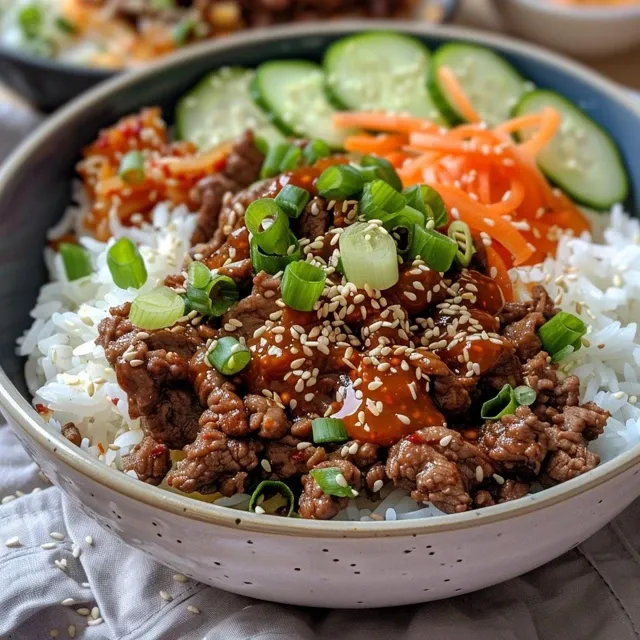
Korean Beef Rice Bowls
Ingredients
Sauce ingredients
- 1 tsp freshly grated garlic
- 1 tsp freshly grated ginger
- 3 tbsp all-purpose soy sauce
- 2 tbsp brown sugar
- 1 tbsp sesame oil
- 1 tbsp gochujang (adjust for spice preference)
- 1 tsp rice vinegar
- 1 tbsp sesame seeds (plus extra to garnish)
Main ingredients
- 2 tbsp extra-virgin olive oil or neutral oil
- 500 g minced ground beef
- 2 spring onions scallions, finely sliced (1 for garnish)
- 3 tbsp whole-egg mayonnaise
- 1 tsp gochujang
- ½ tsp sesame oil
- ½ tsp rice vinegar
- 370 g cooked jasmine rice
- 240 g kimchi
- 1 carrot julienned
- 1 Lebanese short Persian cucumber sliced into half moons
Instructions
- Whisk together garlic, ginger, soy sauce, brown sugar, sesame oil, gochujang, rice vinegar, and sesame seeds to make the sauce.
- Heat oil in a large pan, cook beef until browned, then pour in sauce and simmer for 2-3 minutes. Off heat, stir in sliced spring onion.
- Whisk mayonnaise, gochujang, sesame oil, and rice vinegar to make the mayo drizzle.
- Divide rice among bowls, top with beef, kimchi, carrot, cucumber, and drizzle with mayo. Garnish with sesame seeds and spring onion. Serve immediately.

![['Close-up of a moist carrot sheet cake topped with creamy browned butter cream cheese frosting.', 'Side view of a delicious carrot sheet cake showcasing its rich frosting and texture.', 'A slice of carrot sheet cake with cream cheese frosting displayed on a plate, highlighting its ingredients.', 'Detailed view of a carrot sheet cake with browned butter cream cheese frosting and chopped nuts on top.']](https://snacknova.com/wp-content/uploads/2026/07/carrot-sheet-cake_1_U1-150x150.webp)
![['Close-up view of a moist Two Minute Protein Brownie, showcasing its rich chocolate color.', 'Side angle of a freshly baked protein brownie with a glossy top and visible chocolate chips.', 'Juicy Two Minute Protein Brownie on a plate, highlighting its fluffy texture and almond flakes.', 'Delicious looking protein brownie cut into squares, topped with a sprinkle of sea salt.']](https://snacknova.com/wp-content/uploads/2026/06/two-minute-protein-brownie_1_U1-150x150.webp)