Welcome, fellow food lovers! Today, we’re diving into a culinary adventure that’s sure to spice up your weeknight dinners: Korean Beef Rice Bowls! This dish is not just about satisfying your hunger; it’s a vibrant explosion of flavors that will have your taste buds dancing. Whether you’re a seasoned chef or just starting your cooking journey, this recipe is designed to be approachable, fun, and absolutely delicious. So, grab your apron and let’s get cooking!
Why You’ll Love This Recipe
Here are a few reasons why this Korean Beef Rice Bowl will become a favorite in your kitchen:
- Quick and Easy: Ready in just 30 minutes, it’s perfect for busy weeknights.
- Flavorful Fusion: A delightful blend of savory and spicy ingredients that excite your palate.
- Customizable: Easily adjust the spice level or swap ingredients to suit your taste.
- Nutritious: Packed with protein and veggies, it’s a wholesome meal option.
- Fun to Assemble: Create your own bowl masterpiece with colorful toppings!
Ingredients Breakdown
Let’s gather our ingredients! Here’s what you’ll need to create these irresistible Korean Beef Rice Bowls:
- 1 tsp freshly grated garlic: Adds a pungent kick to the sauce.
- 1 tsp freshly grated ginger: Brings warmth and depth to the flavor.
- 3 tbsp all-purpose soy sauce: The foundation of our savory sauce.
- 2 tbsp brown sugar: Balances the saltiness with a hint of sweetness.
- 1 tbsp sesame oil: Imparts a nutty flavor that’s essential in Korean cuisine.
- 1 tbsp gochujang: A spicy Korean chili paste, adjustable to your heat preference.
- 1 tsp rice vinegar: Adds acidity and brightness to the dish.
- 1 tbsp sesame seeds: For garnish and crunch.
- 2 tbsp extra-virgin olive oil or neutral oil: For cooking the beef.
- 500 g (1 lb) minced (ground) beef: The star of our dish!
- 2 spring onions (scallions): Finely sliced for garnish and flavor.
- 3 tbsp whole-egg mayonnaise: For a creamy gochujang mayo.
- 1 tsp gochujang: Additional for the mayo mix.
- ½ tsp sesame oil: For the mayo mix.
- ½ tsp rice vinegar: To balance the mayo.
- 2 cups (370 g) cooked jasmine rice: The base of our bowls.
- 1 cup (240 g) kimchi: For a tangy, fermented crunch.
- 1 carrot: Julienned for color and crunch.
- 1 Lebanese (short) cucumber: Sliced into half moons for freshness.
Step-by-Step Cooking Instructions
Now that we have everything ready, let’s get cooking!
- Prepare the Sauce: In a small bowl, whisk together the garlic, ginger, soy sauce, brown sugar, sesame oil, gochujang, rice vinegar, and sesame seeds until combined. Set aside.
- Brown the Beef: Heat the oil in a large frying pan over medium-high heat. Add the beef and cook until browned, breaking it up as it cooks.
- Simmer the Sauce: Pour in the stir-fry sauce and stir well to coat the beef. Simmer for 2–3 minutes until the sauce thickens slightly. Turn off the heat and stir through the spring onions.
- Make the Gochujang Mayo: In a small bowl, whisk together the mayonnaise, gochujang, sesame oil, and rice vinegar until smooth. Set aside.
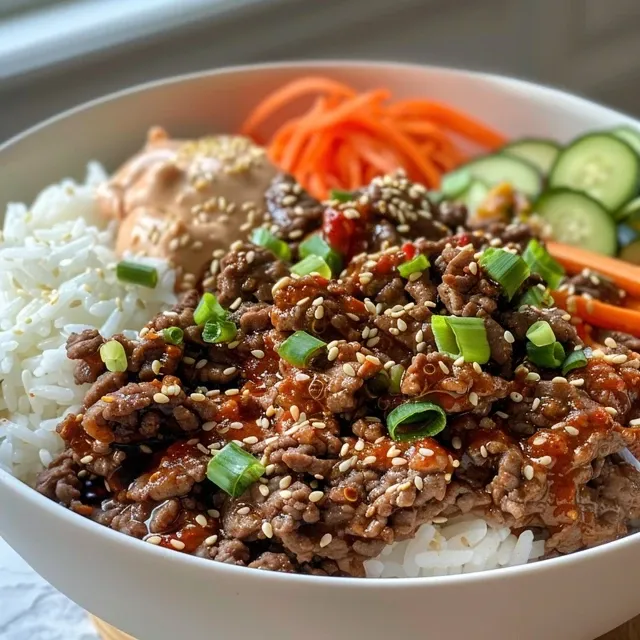
- Assemble the Bowls: Divide the cooked rice among four bowls. Top with the Korean beef mixture and a generous serving of kimchi, carrot, and cucumber. Drizzle the gochujang mayo over the top and garnish with extra sesame seeds and spring onions. Serve immediately!
Pro Tips for Perfect Korean Beef Rice Bowls
Want to take your dish to the next level? Here are some expert insights:
- Quality Beef: Choose grass-fed ground beef for a richer flavor and better texture.
- Fresh Ingredients: Using fresh garlic and ginger makes a noticeable difference in taste.
- Adjust Spice Levels: Start with a smaller amount of gochujang if you’re sensitive to spice, and add more to taste.
- Cook Rice Ahead: Prepare your jasmine rice in advance to save time.
- Use a Non-Stick Pan: This prevents sticking and makes cleanup easier.
- Let it Rest: Allow the cooked beef to sit for a minute before serving to let flavors meld.
- Garnish Generously: Don’t skimp on the toppings; they add flavor and visual appeal!
- Experiment with Toppings: Try adding avocado slices, pickled radish, or even a fried egg on top!
Common Mistakes and Troubleshooting
Even the best chefs have mishaps in the kitchen! Here are some common mistakes and how to avoid them:
- Overcooking the Beef: Keep an eye on it to avoid toughness; it should be browned but not dry.
- Too Much Sauce: If the beef is swimming in sauce, it can become soggy. Use just enough to coat.
- Not Enough Flavor: Always taste as you go! Adjust seasoning and sauce as needed.
- Skipping the Garnish: Toppings are essential for both flavor and presentation—don’t skip them!
Variations to Try
Feel free to get creative! Here are some variations to make this dish your own:
- Spicy Chicken Bowls: Substitute ground chicken for a lighter option.
- Vegan Delight: Use plant-based ground meat and substitute mayo with vegan options.
- Quinoa Bowl: Swap jasmine rice for quinoa for a protein-packed twist.
- Extra Veggie Boost: Add bell peppers, zucchini, or broccoli for more nutrition.
Storage and Make-Ahead Instructions
Planning ahead? Here’s how to store and prep this dish:
- Refrigeration: Store leftovers in an airtight container in the fridge for up to 3 days.
- Freezing: The beef mixture freezes well for up to 3 months. Thaw in the fridge before reheating.
- Make-Ahead: Prepare the sauce and beef mixture a day in advance for quick assembly!
Frequently Asked Questions
Got questions? We’ve got answers!
- Can I use a different type of meat? Absolutely! Ground turkey, chicken, or even tofu works well.
- What if I don’t have gochujang? You can substitute with a mix of chili powder and a little sugar for sweetness.
- Can I make this dish gluten-free? Yes! Use tamari instead of soy sauce.
- How spicy is this dish? The spice level can be adjusted by modifying the amount of gochujang used.
- Can I serve this dish cold? While it’s best served hot, leftovers can be enjoyed cold as a salad!
- What is kimchi? Kimchi is a fermented Korean side dish made from seasoned vegetables, usually cabbage.
- How do I make it dairy-free? Simply omit the mayonnaise or use a dairy-free alternative.
- Can I add other vegetables? Definitely! Feel free to use any vegetables you love.
Nutrition Tips and Dietary Adaptations
Looking for ways to make this dish even healthier? Here are some tips:
- Protein Boost: Add edamame or chickpeas for additional protein.
- Whole Grain Option: Use brown rice instead of jasmine for added fiber.
- Low-Sugar Version: Reduce the amount of brown sugar or substitute with a natural sweetener.
Equipment Recommendations
Here’s what you need for this recipe:
- Non-Stick Skillet: For easy cooking and cleanup.
- Measuring Cups and Spoons: Precision is key in cooking!
- Whisk: For mixing sauces smoothly.
- Serving Bowls: To present your colorful bowls beautifully.
Serving Suggestions
Pair your Korean Beef Rice Bowls with these delicious sides:
- Steamed Vegetables: Broccoli or bok choy complement the flavors nicely.
- Spring Rolls: A light and crispy addition to your meal.
- Fruit Salad: A refreshing way to end your dinner.
And there you have it! A complete guide to making irresistible Korean Beef Rice Bowls at home. I hope you feel inspired to try this recipe and make it your own. Remember, cooking is all about having fun and experimenting. So, gather your ingredients, invite some friends over, and enjoy a flavorful meal together. Happy cooking!
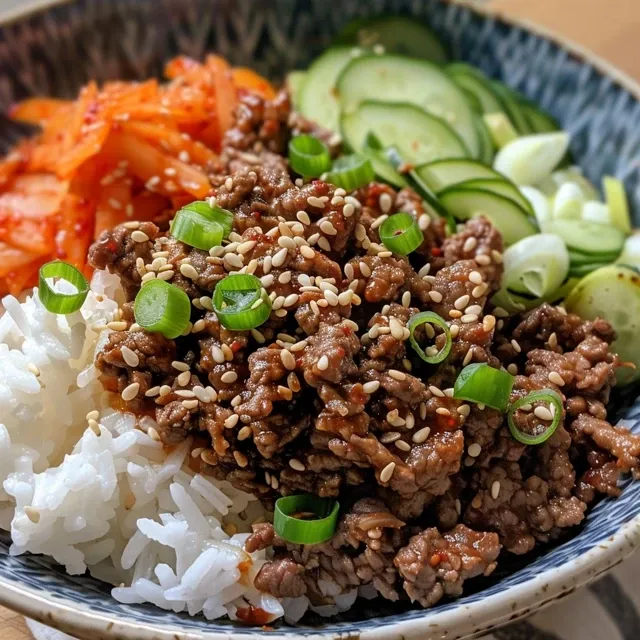
Korean Beef Rice Bowls
Ingredients
Sauce ingredients
- 1 tsp freshly grated garlic
- 1 tsp freshly grated ginger
- 3 tbsp all-purpose soy sauce
- 2 tbsp brown sugar
- 1 tbsp sesame oil
- 1 tbsp gochujang (adjust for spice preference)
- 1 tsp rice vinegar
- 1 tbsp sesame seeds (plus extra for garnish)
Main ingredients
- 2 tbsp extra-virgin olive oil or neutral oil
- 500 g minced (ground) beef
- 2 scallions spring onions, finely sliced (1 tbsp reserved for garnish)
- 3 tbsp whole-egg mayonnaise (see note 2 about dairy-free)
- 1 tsp gochujang
- ½ tsp sesame oil
- ½ tsp rice vinegar
- 2 cups cooked jasmine rice
- 1 cup kimchi
- 1 carrot julienned
- 1 Lebanese (short) cucumber sliced into half moons
Instructions
- Whisk together garlic, ginger, soy sauce, brown sugar, sesame oil, gochujang, rice vinegar, and sesame seeds. Set aside.
- Heat oil in a pan, cook beef until browned, then add sauce and simmer 2-3 minutes. Stir in spring onion.
- Whisk mayo ingredients until smooth. Divide rice into bowls, top with beef, kimchi, carrot, cucumber, and drizzle mayo. Garnish with sesame seeds and spring onion.